Friday, May 7, 2010

Torture porn: the worst genre or the worst genre?

Far be it from me to break with the tradition that video game blogs have of accompanying the mention of Roger Ebert with the wringing of fists and the swearing of Klingon blood oaths, but this article actually has nothing to do with his controversial position that video games aren't art.  Instead, Ebert garnered an eyebrow raise from me with his review of no-and-no-half stars to Human Centipede.

Unfortunately, that's exactly what the makers and proprietors of this shlock want.  The second the most widely known and respected critic in the entire world gave Human Centipede the review of unmitigated shock and disgust they were angling for, he gave it legitimacy.  Which is one thing I have over Ebert: no one respects my opinion, much less knows or even cares who the fuck I am.

And honestly, I still can't believe I'm even doing this genre critique/review for two reasons: first, I don't want this movie to earn a cent because my review caused someone to go to the theater to see what I'm all butthurt about, astronomical though those odds must be.  And second, I seriously can't believe it.  I just can't.  After being exposed to this movie last night, I woke up this morning with a strange sense of denial about the whole thing.  Like, I can't actually believe this movie even really exists.  I mean, I know it does.  I'm looking at it right now.  It's clear as day.  I see the title, I see the screen, and yet it just feels like it can't really actually be a thing.  A thing that millions upon millions of dollars were spent to make.  This must be how people feel when they realize they've won the lottery.  The rape lottery.

So step aside, Ebes; let an amateur handle this.

I didn't always hate the torture porn genre.  In fact, there was a point where I defended it.  There was a point where I thought labeling it "torture porn" missed the point.  After all, if you want to make an omelet, you've got to brutally rend a few eggs.  Of course, at the time I was also defending better movies.

To wit, I will defend Saw--the movie, not the franchise--to the death, even if it means being eaten alive by a horde of angry scarabs unless I can bite my own fingers off in 60 seconds, that I may never again type another harsh word about Kevin Greutert.

Saw, and its spiritual predecessor Se7en, actually had something to say.  Saw's three principal characters were deeply flawed but fundamentally likable people in horrendous circumstances.  Adam and Lawrence find themselves trapped in Jigsaw's human experiment, while detective Tapp can generously be called "obsessed" with bringing Jigsaw to justice.  Adam and Lawrence both harbor a dark past of secrets and lies, condemned to play the game for "not valuing life."  It's a punishment and an offer of a cure--a second chance at life--all they have to do is survive Jigsaw's game.

That's it.  That's all there is.  No secret pasts, no outlandish justifications or sob stories, no flashbacks to "the time before I became a villain."  Just two guys chained in a room and only one key to salvation.  And a ticking clock.

From the moment we are introduced to these characters, we become judges, arbiters of a twisted morality.  We can cheer for one or both of these men to overcome their foibles and co-operate and win the game and their freedom, or we can cheer for them to be crushed.  It's Jigsaw's warped sense of objectivist morality and survival instinct or redemption.

And as for the blood--there's plenty, to be sure.  But honestly, go back and watch Saw or even Saw II again.  There's actually not that much.  A lot of scenes are gut-wrenchingly difficult to watch because of the anticipation of something being done, not in the act itself.  Adam and Lawrence are given the opportunity to free themselves of their shackles by cutting through their own feet.  It's a gruesome decision that stirs in the background of every decision and escape plan, and the tension ramps to a head at the critical moment of the live-or-die decision.  Horror is a guillotine poised to strike; torture porn is watching the execution and then the severed head being bashed with croquet mallets for 90 minutes.

More than the threat of inevitability is the aftermath.  The murderers of horror movie legend all had more than one masterpiece, each of them linking the story to an inevitable climax.  I can think of few better examples than Leland Orser, who was in Se7en for all of a minute-and-a-half, and I still rate his screen-time as more shocking and memorable than virtually any other scene in the movie.

If you've seen the movie, you know what I'm talking about

A strong script and good actors convey way more than all the red dye and corn syrup the effects department could whip up.  When viewing gore on the silver screen, it's easy to create a barrier between what you're watching and what really exists.  We know special effects when we see them.  But good actors conjure emotions, impulses, twitches, memories, mannerisms--the stuff of humanity--and bring that composite to life.  The above scene from the police station interview room comes from a dark place in the mind of someone who has been forced to do a thing too rotten to comprehend.  Had we seen it ourselves, we'd be grossed out and maybe avoid red meat at the dinner table for a couple weeks, but this brief scene shows us more than we wanted to know.  It's something that will never, ever go away.  

Oh, wait, isn't that exactly what John Doe wanted?  Wow, it's almost like there's a compelling story here.

Compare Saw and Saw II to Hostel and you see why it's so necessary for a decent torture porn movie to have an ethos.  Saw was an intriguing premise because the characters were likable enough to want to see them succeed, but flawed enough that you don't want them to weasel out of it too easy.  Hostel, by contrast, is a story of a couple of stereotypical douchebags going to Europe, getting tricked, and then becoming unwilling victims of a snuff fantasy camp.

It's a display of agony and human suffering for its own sake.  It is objectively bad to pay $25,000 to torture and kill a person, so I understand the conflict.  But since the poor saps on the receiving end of it are just kind of dicks, I don't really want them to succeed so much as I don't think they should be tortured to death.  The entire "entertainment" value of the movie is just supposed to be watching some dudes getting tortured while sitting in the audience and pretending that these are the bullies that shoved your head in the toilet during passing period in middle school.

But even still, a good movie can be made around that premise.  Untraceable is a perfect example of a movie that, in spite of the soul-shattering brutality, actually has the presence of mind to keep it relevant.  The basic premise of Untraceable is that a hacker has been kidnapping people and making them the unwilling stars of his online snuff show.  The more hits his website gets, the quicker the star's messy demise, making the viewers accessories to the murder he's broadcasting live.  It's a stunning display of self-awareness for a supposedly "base" genre.  Untraceable turns the mirror to both itself and the audience. We demand to be shocked in spite of ourselves.  We eat this shit up, sick as it makes us.

And speaking of eating shit, that brings me perfectly back to Human Centipede.  I earned that segue.  YOU HEAR THAT INTERNET I EARNED IT

So if you've made it this far you must be wondering what all the fuss is about.  Well, it's your standard "car breaks down in the middle of the European countryside oh gosh it's rainy dearest me shouldn't we find some cover why yes I think that creepy looking isolated mansion in the middle of the woods will do just nicely oh who is this nice gentleman my word is he a German mad scientist who is going to surgically attach us all ass to mouth and and experiment on us why yes I think he mffff hmmmfff fmmm mrrrrrff mmmmph" story.

Yeah, I think that pretty much nails down the gist of it.  It's the kind of movie that, after watching, you can't really chuckle at how savage the Roman empire was compared to the 21st century, what with their Colosseum and all.

It's the kind of movie that leaves you shaking your head and wondering why and how.  Why anyone would make this and how we, as a species, could have ever evolved so far as to call this entertainment.

Although it certainly does make a powerful metaphor for the Saw series.  See?

Incidentally, more work went into this image than any of the last four Saw movies

There aren't any protagonists in the movie.  There are victims and a mad scientist.  The characters are paper-thin, not so much people as they are screams and tears with bodies attached.  By the time they've been been captured and surgically mutilated in the movie, what more is there?  Nothing remains except to watch this abomination writhe and suffer.  In Saw, no one survived the game without paying a cost, but the cost was never so great as to outweigh survival.

In Untraceable, there is no hope of salvation for any of the victims.  We aren't there to root for anyone.  We're spectators and the movie wants to make damn well sure we know that.  But Human Centipede?  We have no reason to root for the victims because we don't care who they are.  They're so mutilated that there's nothing left but to die.  It's like watching a coma patient on life support while your asshole kid neighbor kicks at the plug in the wall socket.  

To put it another way, at some point you've just got to total the car.

It's human misery as spectacle with absolutely no redeeming value.  The only answer to this this movie provides us with is to the question "when is it okay to go ass-to-mouth?"

"Well?"

That's not to say more terrible movies haven't been made (after all, Korean filmmaker Jin Won Kim made The Butcher, a 75-minute torture and death-rape extravaganza, which I think edges this one out in terms of hateful, exploitative films with absolutely no redeeming value--but I'm just a big softie for death-rape).  I'm saying that this brand of torture porn is a waste.  A waste of time, a waste of money, a waste of effort.  It has nothing to offer, especially in a 21st century world where you can have your daily dose of human misery for free on the Internet, without having to rely on the finicky schedules of cunning hacker-kidnappers.

I understand if people can't get through the day without watching total strangers breathe their last in a strange place thousands of miles away from home.  That's what Wikileaks is for.  What I'm saying is that there's no reason, purpose, or value in paying studios to manufacture it and market it as entertainment.

If after all of that, you still feel like you must see this movie--whether it be for the hype, the gross-out factor, or being able to beat off with your own tears while imagining the faces of the three girls who shot you down for the prom being surgically grafted to each others asses--please don't pay money for it.

This is the 21st century after all.

Monday, April 26, 2010

All aboard the hype train! (toot toot)

The phrase "too big to fail" has embedded itself in our cultural lexicon lately.

And perhaps, for some things that's true.  Whether it can be applied to the financial sector or automotive industry remains to be seen.  In case this is your first time tuning in, this isn't the kind of blog to get into that kind of discussion.  In fact, it's a phrase I'd never have even typed if it weren't for one little fact: as I type this, Super Street Fighter IV is coming tomorrow.  And normally I'd be overjoyed.  I enjoyed Street Fighter IV about as much as anyone could realistically expect to enjoy a fighting game.  The gameplay was balanced, the cast was diverse and generally interesting, but...

Well, it felt... off.  Like if you spent your entire adult life dating supermodels, and suddenly this new girl clearly had a lot of plastic surgery and implants.  At first it might seem like everything's okay, but you can only overlook the scars and stretch marks for so long.

What can be said, with little fear of contradiction, is that it if there is one thing to which the maxim of "too big to fail" cannot ever be applied, it's mass entertainment.  Because if it's one thing that can be said of Hollywood and movie buffs, gamer geeks and developers alike, it's that we know how to ruin a good thing.

Man, do we ever

Maybe we just can't help ourselves.  Fingers can be pointed in any direction, from producers to directors, scriptwriters to editors, fans to fanservice.  A case can be made for any and all of the usual suspects, but for me, the blame can squarely be placed upon two things: hype and the Heisenberg Uncertainty Principle.

Alternately, these two things

I'll address the less obvious one first:

The Heisenberg Uncertainty Principle
In 1947, Jimmy Stewart starred in a little movie called Magic Town.  Jimmy Stewart stars as Rip Smith, an opinion pollster who stumbles upon the perfect town for his profession: a place that somehow perfectly reflects the opinions, attitudes, and behaviors of the entire United States, but things go awry when the town suddenly becomes aware of their position in Smith's polling business.  But when the town's citizens suddenly become aware of their status as guinea pigs, they lose their magic touch and the whole plan comes crashing down.

Have you ever done something awesome entirely on accident?  The kind of thing you spend hours trying to repeat in vain and the only thing you have to show for it is a severely sprained wrist and a lot of hard-to-explain stains on your Mouse Trap board?

Or have you ever been out with your friends and someone shouts "oh, that's a picture!" and everyone frantically tries to re-create the pose that they were just in for the camera but they just can't get it right?

It's just harder to do things that come naturally to us when we know we have to do them--and it gets even harder when we know a lot of people are watching.  It doesn't take a scientist to figure that out.  But it does help.  Fact of the matter is, no one knew just how big Star Wars was going to be when it first came out.  No one was putting George Lucas or the guys who actually knew what they were doing that the studio paid to follow him around under any real pressure besides "make the studio some money."

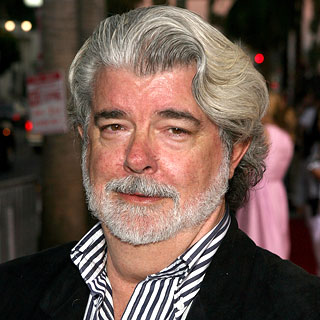
A rare photo of Irvin Kershner (left) and a young George Lucas (right) on the set between takes

But success hit, and suddenly there's all this pressure to make the next one bigger and better.  Doing so often results in those responsible at the production level to suddenly forget everything that made the original so amazing and beloved.  This is doubly true if they're suddenly working with a budget that puts the GDP of half the world's countries to shame.

This is also known as Final Fantasy VII syndrome 
The same can be said of my beloved Street Fighter series.  The original Street Fighter II was nothing less than a bonefide smash hit.  It single-handedly revived the flagging arcade scene in the US and spawned countless imitators throughout the 90s.  Maybe it's just that times were simpler then or maybe it's that expectations were just lower, but the subsequent releases of Street Fighter II Champion Edition, Street Fighter II Turbo, Street Fighter II Dash, Super Street Fighter II, Super Street Fighter II Turbo, and Street Fighter II: Hyper Fighting were all generally well-received.  Despite being derivative, they still managed to gobble a fresh pocketful of quarters with each new release.

Then came the Street Fighter Alpha series, and again, we were pleasantly surprised to find our favorite characters back in action.  Sure, the shock value wasn't as high as the original Street Fighter II release, but the knuckle-draggers had just discovered Mortal Kombat II, so we'll gloss over that.  Street Fighter EX came out and damaged us all irreparably with its shittiness, but then came the diamond in the rough: Street Fighter III.  This one was different.

So different, in fact, many people hated it.  It was originally slated to have an entirely fresh cast of characters.  Not a one from any previous game would return.  And then came the outrage.  Fans demanded Ryu and Ken at least appear in Street Fighter III and they got their wish.  Street Fighter III: Third Strike came in '99 and--despite being considered a commercial failure--set the gold standard for fighting games for any serious fan of the genre.  It was so good that it was still the headline event of Evolution--the major fighting game tournament--eight years later.

When Street Fighter IV was announced back in 2008, wads were shot.  Millions, perhaps billions, of gallons of wads saturated underpants across the world because no one ever expected another Street Fighter game.  But there was still money to be made, so maybe we should have.

The man was Yoshinori Ono.  The legend goes that Capcom didn't want to make another Street Fighter game after the Street Fighter III series did so poorly, but Ono begged enough that he eventually got his way.  Dude was a fan all the way back from the Alpha days.  And Ono could have made the next great game in the series.  Instead, he made Street Fighter II.

But isn't that a good thing?  Well, arguably yes.  But Ono approached the game from the perspective of a man who had no intention of making a great game.  He wanted to re-capture lightning in a bottle.  All the elements were there.  Every character from Street Fighter II reprised their roles in Street Fighter IV, with four new additions.  And the additions are where the real design problems began to show.

Ono wanted to create a female character that Americans would love and want to use.  He bragged about the extensive market research he had done in creating C. Viper.  

Before you say "oh, that's not so bad," I will remind you that she's wearing rocket boots

Market research?  The fuck?  Did they do any market research in making Ryu, Ken, Chun-Li, Guile, Mega Man, Viewtiful Joe, Jill Valentine, or any of the other myriad of iconic characters from Capcom's golden age?  No.  They exercised good design, approached each character with a blank slate and a head full of fresh ideas.  They were having fun: that's something that just can't be quantified.


Rufus and Hakan are two more examples of this sort of approach to character design.  They're joke characters, but instead of being endearing, the attitude in the design seems to be from the Will Ferrell school of comedy.  That is, "bigger and louder is always funnier."  Creating lasting, memorable characters gets pushed aside in favor of a cheap, perfunctory joke.


This is also sometimes referred to as a game "having a case of the Tingles."

These characters were supposed to have an immediate, visceral payoff for the player.  Rufus (left) is a big fat guy who's actually really, really fast!  Man that's so wacky!  Never seen that before!
Nope.  Never.

Hakan, on the other hand, is pure ridiculousness distilled into a character.  Admittedly, it's pretty funny.  And if it were any other genre, it'd be okay.  It's funny the first time.  Hell, it's funny the dozenth time.  But Street Fighter 4 is a fighting game--a game that, by its very definition--implicitly states that it will replayed hundreds, if not thousands, of times, and once the novelty wears off, what's left?

They're just too fucking ridiculous to exist, and yet, here they are.  Hakan and Rufus just insist too much upon audience's suspension of disbelief.  And I know what you're saying: "but you can suspend your disbelief for Blanka, a green half-man, half-monster who shoots electricity!  Or a yogi who stretches his arms like a rubber band and breathes fire!  Why are Rufus and Hakan so hard to believe?"  The people who say shit like that are the same ones who defend the new Indiana Jones movie by saying aliens aren't fucking outlandish because the original trilogy featured a 700-year-old knight templar and a Box o' God, or "you believe the force could be caused by some sort of spiritual energy created by all living things, but midichloriens are too 'out there' for you?"

Well, yes.

Games and movies exist in a vacuum.  They are self-contained worlds.  But in order to have any sort of credibility, they have to have internal consistency.  That's why you can believe in Harry Potter's world, but if suddenly J. K. Rowling revealed in the final book that everyone was actually robots fighting against alien warlords in a parallel dimension, everyone would call bullshit.  It's not about suspending all disbelief.  It's about believing in another world.

And then there's the other new character, Juri.  She's a character purely designed around sex appeal.  Like, that's it.  That's her gimmick.  She's "the sexy one."  The female cast of Street Fighter has always been good-looking, but it's always been secondary to the fact that they're fighters.  But with Juri, that's it.  And far be it from me to sound like a prudish old man about this but was it really necessary?  There are so many other games based around sex appeal.  The old, jaded bastard in me has finally seen enough.  There comes a point where digital boobers just don't do it anymore.  If I want tits, I have the Internet.  I play games because I want to have fun.

Seriously, what else could be going on here?

It smacks of insincerity: "we're creating these new characters because these are the types of characters that fighting games are supposed to include/this is what our target demographic has been polled to like."  Don't give us what you think we want!  We're fucking idiots.  We have no idea what we want.  

And that brings me to my next point.

Hype
This one's gonna hurt.

Because this one is our fault.  As fans, I mean.

There is no force greater in the entire world, than the whining of fans.  We are a loud, whirling black cloud of ravenous feasting and destruction.  Allow me, for a moment, to stop talking about Street Fighter and stuff George Lucas fucked up and take you back to the summer of 2004 when Spider-Man 2 hit the box office.  The first movie was good, but holy shit, Spider-Man 2.  It was bigger, flashier, darker, funnier, more interesting--better in every single way.  It expanded the world and dove headfirst into the lives of the characters.  It was everything you could have asked for in a sequel and then some.

So when Spider-Man 3 was announced, you can bet your bottom ball that fans were pumped at the possibility of another great movie.  The greatest movie.  

So much so that no one was willing to accept what we got instead: a good movie.

Not great, just good.  Onward came the swarm, because by the time the movie came out, there was so much hype, expectations were so high, that there was simply no way Spider-Man 3 could ever be the movie it was built up to be.

And suddenly, we all became a little more like this guy

Getting back to Street Fighter, maybe the same thing happened there.  Capcom had shown willingness to compromise with Street Fighter III.  Remember how the outcry of fans was so loud and obnoxious that it was enough to get them to put Ryu and Ken (and later Chun-Li) in as well?  Well, with the announcement of Super Street Fighter 4, again came the shouting.  

About which characters should be added, who should be buffed, who should be nerfed.  Fans were given unprecedented access to the development of Super Street Fighter 4, all fueled by Capcom and Ono continuously proclaiming: "we hear you, we're listening."

For the love of God, don't do that!  Don't encourage us!  If we were all bursting with great ideas, we'd all be working in the game design industry.  But we're not.  We're a bunch of smelly man-children who can barely hold down our part-time jobs at Kinkos.  Jesus.  I understand taking suggestions from a small, hand-picked group of elite tournament players, but having access to the Internet and your own blog doesn't mean your opinion should mean shit to anyone.  

Your own blog, not mine.  Everyone should listen to me.

And there was another cost to that kind of access.  I and anyone else with even a passing interest in Street Fighter knew everything about this game two months ago.  We knew who the new characters were going to be, we knew the new moves and Ultra combos, we knew the new stages, the new music, the nerfs and buffs--everything.  So now, on the day before the launch, it's kind of hard to, you know...

...care.

Ever since the announcement of Super Street Fighter 4 last year, I'd been following the hype.  Every weekly update on the Capcom developer blog, every character trailer and discussion, the pre-launch tournaments, I was there, feasting my eyes on everything the next installment had to offer.  And now, I'm stuffed.

It's like coming downstairs on Christmas morning to find all your presents covered in saran wrap.

Last stop for the hype train.  Toot toot.

Tuesday, April 20, 2010

So I married a cine-sleeper

My wife is an amazing woman.

She's funny, sweet, intelligent, beautiful, an amazing cook, a source of inspiration and emotional support, a pillar of strength and joy, and somehow she can put up with my shit seven days a week.  When you meet that person in your life that you know is destined to forever be at your side, you feel that natural force of attraction drawing you to them.  Hopefully it's not gravity, because while love is patient, kind, not envious or boastful, it also has a very strict no fatties rule.

No, the attraction I'm describing is that one perfect trait that endears them to you more than you ever thought possible in another person: one outstanding quality, characteristic, habit, or feature that, above all else, defines that person as your destiny.  For me, it's her tears.  Her delicious, life-sustaining tears.

Seriously.

This chick can cry at a movie like you would not believe.  It's like one minute the protagonist is sad because his cat Scruffy ran away or something and then the next minute you look over and there she is, eyes all red and wet and you're like "huh?"  You'd think it was a bad thing or that at least it would cut deep into the tissue budget but they hand packs of them out near the train stations anyway so it's not even like that's a big deal.  Still, we are never, ever watching Old Yeller.  Despite there being plenty of evidence to the contrary, there actually is, in some circumstances, too much of a good thing.

I'm a movie lover, and while I won't boast that I have the best taste in movies in the whole world (just better than all of my friends and people I know personally), the wife is a solid runner-up.  While she may not be up on all her lingo or be able to describe what "Chekov's Gun" is or the beats that comprise a three-act movie, Mrs. Merican is nothing if not exceptional at being able to carry on a conversation for days, weeks about a movie after watching it together.

A couple months ago we sat down together for The Princess and the Frog, and afterward pinned and dissected the thing for hours, finally impaling the head on a #2 pencil and flicking the testes at each other until the lunch bell.  A few days passed in their usual routine, dinners, breakfasts, work hours, and commutes stole away our focus until out of the blue: "you know what else pissed me off?  The fact that there was no actual tension or conflict or even interaction between the protagonists and the villain.  Dude's seriously in the movie for all of like 5 minutes.  It's like they were locked in separate rooms.  It worked in Lion King because that was a good movie with growing, developing characters, but this... this is five good songs bundled in the world's worst music video."  New life poured into the room and again we bounced ideas at each other, commenting and critiquing.

Over a Disney animated feature remarkable only for being the least profoundly disappointing theatrical release since "Hercules."  I'd never met anyone who could get so emotionally involved in a movie--any movie--before.  Even shitty movies.  Even movies she doesn't even like.

Even movies where that kind of emotional involvement is not only unwarranted but profoundly silly.  She cried when the protagonist's girlfriend was kidnapped in Orgazmo.

This is the kind of woman a guy could spend the rest of his life with.

Even go see a Valentine's Day celeb-circle-jerk with.

But then the courtship phase ends.  Let's be honest: aren't we all on our best behavior in the courtship phase?  Those giggling, whispering first months where two people are just happy that in a world where, in accordance with Sturgeon's Law, romance so often feels like roshambo.  All the while, wrapped in that sugar-coating is a festering tumor of insecurity and second-guessing, not wanting to show who we are because we first have to make them fall in love with the person we want them to see.

I'll be honest, too.  I poop when she's around now.  Not like, all the time; just when I need to.  But I do.  Before, though, those first couple months, anytime she visited I'd always suppress it like an Mel Gibson suppressing an angry tirade against the liberal Jew-run media during a field sobriety test.  I may have even done more permanent damage to my colon than ol' Mel did to his career when I finally let fly, too.  But back then I knew that every intestinal ache and smothered squeak between sweaty buttocks was worth it, because this woman... she was once in a lifetime.

Real love sticks around for the subsequent proctologist visits.

And the door swings the other way.  Once rapt with attention even while watching Shaun of the Dead on our fourth or fifth date (the wife hates horror... any horror at all), I now find this same woman dozing off during Wall-E, passing out during Iron Man, catching a quick nap during Clerks.  Even when she picked the movie.  I've heard all the lines.  "I'm tired," "it's getting late," "I'm just so busy at work," "please stop cupping my breasts when you think I'm asleep."  At some point you just tune it all out.

That point, for me, was when I pulled out 1977 Best Picture winner "Rocky" for the night's entertainment.  We took the computer, popped it on, and boom.  Out.  To say she didn't go the distance is a gross understatement.  She barely lasted through the opening bell.

"Down!" her grizzled Irish brain stem cried to her eyelids from the corner of her skull.  "Stay down!"

No.  No no no no no.  Not to this.  Not to the Italian Stallion.  He deserved better.  He deserved better.  I sat there on the bed bewildered.  Her sleepy head down on my lap as I tried to piece together what had happened.  What had gone wrong.  What I had done to make her do this to Sly and me.  I don't know, I just make her so crazy sometimes.  I know she's just doing it because she loves me and she doesn't want me sharing my lap with anyone else.  Sometimes that happens, you know?  Sometimes like cats or babies lay down there and she just has to teach me a lesson that it belongs to her.  I'm just so clumsy.

I feel like there should be a shelter I can stay at, or at the very least a support group.

Someone please help me, before she does it again!  Who would punish another person's sensibilities the way she's doing to mine?  Anyway, I'm going to have to cut this entry off here.  This bean burrito is not agreeing with me at all.

Sunday, April 18, 2010

On this very special episode of Blossom

Sakura sakura...

And so goes another cherry blossom season.  Yesterday, the wife and I ventured forth for the third and final cherry blossom viewing of the season.  We looked forward to spending an afternoon together beneath the frail canopy of pink and white.

There really is nothing quite like an afternoon spent with friends or family, adrift in a sea of petals, like the world's fruitiest snow globe.  Surrounded on all sides by a patchwork of pink and green and loved ones in the crisp morning air, a bottle of sake nestled between a couple six-packs of Asahi and a picnic lunch, it seems like nothing in the world could possibly be wrong.  Not even the fact that you're drunk off your ass at 10:30 in the morning.

So with the past two cherry blossom viewings being such a huge success, why not go for the three-peat?

That was a rhetorical question.

As I discovered from hiding my mother's birthday present in my closet for a month, flowers die.  Scientists still aren't sure why this happens, but there's one thing for certain: it makes a mess and stems are terrible gifts.

Yes, cherry blossom viewing is a temporal recreation, with a viable viewing period of only three or four weeks.  So 'round about week four, things start getting a little... crazy.

Just a bit.

 In cherry blossom viewing, as in so many other tourist activities, it's all about location.  The famous places get swamped.  Such was the case with Tenmabashi, our destination for yesterday's excursion.

The majesty of Mother Nature's sublime palette splayed across a delicate canvas is somehow lost when that God damn 170-year-old four-foot tall bitch shoves her elbow into your kidney for the tenth time.  I'm bigger than you, I'm stronger than you, and I'm not shaped like a Tetris piece you old hag!

Seriously, listen to this while you look at this picture and tell me it doesn't fit.

But beyond the bruised ribs, stomped toes, and occasional once-in-a-season photo opportunities marred by a middle-aged dude's balding dome in the frame, lies the jewel at the center of the sakura festival's crown: the festival part of the festival.

The festival combines all the best aspects of city life into one long strip.  Stall after stall bursts at the seams with promises of new and exotic flavors, edible artwork, and game specifically designed to make you look like a sucker.  It's a lot like the carnival in America, except with less reason to be embarrassed of your species.

"How the fuck do magnets work?"

No amount of money is safe in a tourist's wallet at a Japanese festival.  From the haunted houses to the "American Potatoes" (French fries) to the goldfish-catching games, around every corner lies a new experience beckoning just one more 500 yen coin from your pocket.  Because if you try really, really hard and aim that cork-gun just a little bit more to the right, you're sure you can knock that Nintendo Wii box off the platform, because you're just know you saw it move a little last time.  Sucker.

Just one more thing, if you're ever at a Japanese festival and you see a bottle of this: 
It says "ramune" on the bottle, but I'm pretty sure that's just the Japanese word for "heroin"

BUY IT.

200 or 300 yen might seem a bit expensive for an 8.5 ounce bottle but sir or madam, you would be mistaken.  This stuff is a golden shower from the Skittles rainbow.

There's nothing else like cherry blossom season in Japan.  It's something I'm really, really going to miss upon my return to the States this summer.  Maybe one spring break I'll make it back out to the 'Pan for another dose of it, but for right now I think I've built up a tolerance.  Or maybe my liver's failing.

Monday, April 12, 2010

Another one you may have missed

John Dies at the End.

It's a title that defies the reviewer not to spoil anything.  I've been putting off this review for a full week simply due to the sheer daunting task of trying to do this book justice without detracting anything from going into the book fresh.  In order to put off the most difficult task until the end, I'll start by giving a little background on the book itself.

John Dies at the End is a creature unto itself, pock-marked by the acne scars of the Internet's adolescent phase.  True to form, author David Wong wrote John Dies at the End in installments on his website of the same name, giving his product away for free to those curious enough to check in with the site regularly to see the story progress.  One would be hard-pressed to brand Wong's rogue authoring a failure, with John Dies at the End now available in paperback (and unfortunately no longer available free on his site), with a possible movie release coming in 2010 and a sequel already in the works.

So... is it worth a read?  Absolutely.

But.

Understand that I give this recommendation as a mid-twenties white American male.  I am the target demographic here.  I'm not trying to pass judgment, but rather give some perspective on where I'm coming from in writing this review.

The story of John Dies can basically be summed up thusly: if you took the premises of Ghostbusters and Clerks and asked Terry Pratchett to toss in an homage to Slaughterhouse 5 and get 350 pages out of the thing, you'd have a pretty close approximation of what you see here.  The focal characters of John Dies are the narrator and possible Mary Sue wankfest David Wong and his friend John Cheese, the Dante and Randall of our story--a couple of loser burnouts that play their roles to a T, right down to one of the characters holding down a job at a video store.

When they take a street-drug going by the name "soy sauce," suddenly, they find themselves hurtled into terrifying lucidity.  Suddenly they gain the ability to trace the very strands of the fabric of the universe, flipping the bird to Heisenberg and his shitty little uncertainty principal.  They find themselves unstuck in time, existing across the myriad of timelines spanning the multiverse.  The trip and the subsequent side-effects are short-lived, but our heroes are forever changed by the journey.  They see horrors existing in a reality parallel to our own--ghosts, trans-dimensional travelers, monsters--and soon discover that these malignant forces can see them back.  Naturally, John and David carry this sudden inversion of all known laws of nature and physics to is logical conclusion: finding a way to get paid. Faster than you can say "inadvisable career move," the pair find themselves paying the rent doing a job that's one part Ghostbuster and two parts unwilling and unwitting heroes amidst a plot that threatens the very universe, which is still a step up from working at a video store, if you think about it.

But to describe John Dies only by discussing the plot is to do a great disservice to what makes it such a great book.  For one thing, it's funny.  Not always "laugh-out-loud" funny, but at several points during the read I found myself snickering, going back and re-reading the straight-man/funnyman exchanges between David and John or scenes of depravity illustrated in vivid comedic hues. What really makes it work is Wong's fantastic sense of delivery and timing.  The character perfectly captures the voice of a disaffected, male, twenty-something loser barely able to cope with life in the real world before suddenly playing prison-bitch to a gang of trans-dimensional insect-monsters.  David is not the typecast protagonist this genre typically calls for.  When he finds himself a major player at the center of a trans-dimensional plot, it is his anger and desire to just get out of the thing that sees him through.

Much of the action of the book takes place within the framing device of an interview with a magazine columnist, with David trying to get his story out to the public once and for all.  It's a strong choice for the narrative--David may not be a relateable hero, but he has a powerful, uncompromising narrative style that makes his account of the action very fun to read and easy to follow.  Wong is a vivid, visceral writer with a talent for appealing to the senses.  David's cynical and ugly perspective on the world is palpable to the reader.  Everything has a layer of grime to it, and every chapter feels as though it is desperately in need of a good scrubbing.  I'm reminded of one passage in particular where David is force-fed a giant spider and describes, sparing no putridity, the crunch of the hairy carapace just before swallowing the writhing, salty meal about three bites too early.  I want to compare it to Fear and Loathing in Las Vegas, but understand that I am not comparing the work of Thompson and Wong on any other merit than this particular stylistic choice.  Nothing is beautiful in John Dies--the world it depicts seems sick, each page oozing humor both witty and bodily.

For the first 200 pages, this made for a fast read.  Every creature David describes is a portrait of something truly deranged.  Rather than trying to describe things familiar to the reader: mummies, vampires, wolfmen, etc., Wong cobbles together grotesque amalgamations from the spare parts of nightmares, stuff that pushes the boundaries of the reader's imagination.  There is no comfort in familiarity.  Though David and John's enemies are legion, it never seems like a disposable swarm--each new encounter is a feast for the mind's eye.

Unfortunately, Wong's powerful style isn't entirely to the story's benefit.  For instance, whereas David and John both have distinctive voices as characters, the rest of the cast seems to be a reflection of John, right down to the distinctive cadence of his dialogue.  While this can, in part, be forgiven due to the aforementioned framing device and much of the story being told in David's own words, it does make the novelty of a stylish narrative wear off that much quicker.  And once the story returns again to the present, the transgression becomes inexcusable: the people need to talk different from each other or else they're swallowed whole.

Moreover, Wong plays to his strength a bit too much.  David's critical view of the world never really changes.  Other characters change around John and David, but the protagonists never do.  And when the story peters out in the unmarked epilogue and denouement, it seems like Gandalf the White returning in blinding glory just to do the "how'd-that-quarter-get-behind-your-ear?" trick.

Past the 200-page mark, things definitely take a turn for the weirder.  The comedy-horror seems to get shelved for a trans-dimensional fantasy that, while still satisfying, signifies a gear-shift with an almost audible ka-chunk.  The tight horror narrative opens up into a sprawling world that, to his credit, Wong feels no need to explain.  My best friend wrote in his blog (citation to follow, assuming his permission) of a Miyazaki film that there is no need to explain everything.  That leaving some things a mystery expands the boundaries of the story's world, and while the world of John Dies may not be entirely enriched by the sudden tidal wave of accumulated minutia of a whole new world introduced at the start of a third act, it certainly does not allow itself to lose steam by getting bogged down in the details.

For the same reason, I thought Silent Hill 3 was a distinct step down in quality from Silent Hill 2 because it tried to give some background on the town and why it was suddenly such a malignant force.  Silent Hill 2 understood that it didn't matter why.  Things are terrifying when you don't know why they are.  The parallel world of John Dies is fantastic because we don't know anything about it--and adding an extra 50 pages telling us more wouldn't do any more than a paragraph of the bizarre happenings of a bizarre world.

John Dies invites its readers into its world just so long as they promise not to ask too many questions.  As horror/sci-fi/fantasy goes, the suspension of disbelief it requires is admittedly pretty high up there.  If you watched The Matrix and thought "why don't the robots just use cattle as an energy source?" you're probably not going to enjoy this one nearly as much as a willing observer along for the ride.  This is one where a passive reader is probably going to get more out of the experience than a stickler for detail.

In all, it's a satisfying read and a legitimate Internet-age breakout hit.  You can't get it for free anymore, but as trade paperbacks go, you could do a lot worse.

Wednesday, April 7, 2010

No thanks, I'll take the stairs

At times, I feel like my blood is too thick for life in the 'Pan.

Well, that's not true, but I do sometimes feel a bit anemic.

Life in Big City, the 'Pan is riddled with eccentricities, depending on which Big City you happen to call home.  Hiroshima-style okonomiyaki differs from Osaka-style okonomiyaki in that it contains soba noodles.  Osakans ride the escalator standing on the right side, allowing for faster-moving traffic to pass on the left.  Tokyoites ride the escalator standing on the left, allowing passing on the right.  And Kyotoans don't give a shit which side you want to pass on--those fuckers wouldn't let you by if the building were on fire.  Yet, despite all the idiosyncrasies of each of the major cities in the 'Pan, there remains one major overarching constant: they're all fucking crowded.

The streets are crowded, the stations are crowded, the department stores are crowded, but nowhere is the crowdedness more noticeable or of a more severe degree than the escalator.

Perhaps some of you have seen this classic photo and have thought this was a uniquely American foible.  It is not.


How often have I heard it lamented by Westerners that Asians seem to possess the preternatural ability to maintain a petite figure despite having an enormous appetite.  Despite the best answers medical science can offer us at this time, I do know this: it is decidedly not the result of taking the stairs.

I think we're going to have to give bulimia the assist on this one

Life in the nucleus of a crowd is exhausting.  It wearies the mind and soul to constantly be beleaguered by the pulsing glut of humanity.  Midwestern life is boring, depressing, irritating, and embarrassing, but it's most certainly not crowded.  Unless you happen to be one of those losers from Chicago, and if you are, fuck you for ruining my point.  Even people who have spent their entire lives in the 'Pan concede that spending life shoulder-to-shoulder all day every day wears a bit thin.

Perhaps some of my readers are familiar with love hotels.  Perhaps even a couple are intimately familiar with them.  For those who aren't, I'll give you a quick rundown: it's the Japanese version of a Motel 6.  It's where two people go to fuck in privacy in Japan, but unlike in America, you usually don't kill her afterward.

The "Rest" package typically isn't as restful as you might expect

I have heard, on more than one occasion, of friends going to these fine establishments and never once removing an article of clothing.  They go to chill out, sing karaoke, play Playstation 2 (some people smoke after they bone; in Japan, I guess they play God of War), drink, and when the time is up, they pay the nice person behind the fogged glass window or slip the necessary amount in the automated money deposit, and leave.

A long way to go just to get away from it all.

My own place of refuge from the hustle and bustle of Big City life isn't nearly as expensive, and likely wouldn't horrify me if viewed under a black light.  As much.

I take the stairs.

For a few precious moments, it's a breath of fresh air.  A moment apart from the thickness that clings like chewing gum with every footstep.

I ride four trains through four different stations to arrive at work every day.  An irreplaceable hour of life spent in a humanity compactor in a land that is not my own.  But for the thirty huffing seconds between walking from one platform to the next, I'm home again.

Thursday, April 1, 2010

Young man, old dog

Today was a day almost a month in the making: a triumphant return to the land of the gainfully employed.

For the past month, I was Ahab.  But instead of "hast thou seen the white whale?" my quarry was far more elusive: "hast thou seen the white-people employer?"  And for like three-quarters of it, the reply was always the same: "nay."  My wife, ever my humble Queequeg, lugging around the coffin of I don't know let's say companionship.  But after a back-breaking, oar-cracking month, it appeared on the horizon. 

Excuse me as I break with my shitty Moby Dick metaphor to metaphorically shit my pantaloons in pure terror. 

For two-and-a-half years, I had been employed with the same eikaiwa, teaching the same lessons, from the same books, grinding the same structure that had been drilled into the lot of us since day one.  An interchangeable part in the English factory--and lest you think this description is the bitter rambling of a jaded ex-employee, my trainers reiterated to me and the rest of my training class, word-for-word, to "follow the structure... so students can transfer schools and not notice the difference."

Meanwhile, in the present, I managed to get on with a cram school in Kyoto prefecture.  Pretty good gig.  Pulling down two Gs a month and some sweet bennies and I can't even pretend this is a good job but at least it keeps me employed and honoring the terms of my visa and not get deported so just pretend I added a third positive characteristic to the list.  Still, money's money and the living situation the wife and I are currently in doesn't really insist much of our finances.  At the very least, I get to do my part to rob Japanese children of irreplaceable moments of fleeting youth.

Seriously.  I'm officially one of the bad guys. 

All of the horror stories you've ever heard about Japanese cram schools are absolutely true.  This one's a bit more "edu-tainment"-oriented than most, but it's hard to stay edu-tained when mean old Mr. Merican's dropping 10 pages of homework and a monthly book report on a class of nine-year-olds.  Unfortunately, the manager clearly stated that if we don't assign homework after every class, the parents edu-plain.

Since embarking on this month-long journey of trying to find a job at a place where they don't abuse children, the chill of a spectre long buried in the depths of my consciousness has wrapped its bony fingers around my throbbing, irritable bowel, nesting sick and squalid in my stagnant guts. 


It's the crushing grip of a realization made long ago and suppressed for an equal duration:  I have absolutely no skills.  I don't mean that in an "aw, don't be so hard on yourself, Merican" way.  I mean it in a Napolean Dynamite way. 

Don't get me wrong; during my time with my old company I learned the encumbrance limit of my own sanity.  I learned how to be unphased by corporate and intra-office political bullshit.  I learned how to continually lower my expectations of the fundamentally good and redeemable nature of mankind--not that I'm bitter.  If you recall, I already said that I wasn't, and I certainly wouldn't have repeated myself unless I really meant it.

The problem is that an eikaiwa career teaches none of the most basic, rudimentary skills necessary to actually teach a class of children.  What it did teach was structure.  Rote, mechanical, useless structure.  Like teaching a dog to shake--the dog doesn't understand the meaning of the gesture, simply that it is his task to perform on command.  The week-long period of training at the start of a contract was little more than a glorified obedience school.

The enormity of it just makes me want to roll over and play dead.

And now, poised at the brink of this latest undertaking, I can't help but feel like the sheep in wolf's clothing, ready to be torn to shreds should my cover drop.

Today, I visited my new school for the first time, met my co-workers, got a feel for the school, did the usual first-day stuff.  It was a fantastic experience, but a decided departure from the fanfare that accompanied my arrival (and that of the foreign teachers who followed) at my old job.  I mentioned to my wife how I drew little more than a casual "hey" when I walked through the doors for the first time as a member of the staff.  A former eikaiwa employee herself, she pointed out that foreign teachers at eikaiwa are typically spoiled, put on a pedestal, essentially calves being fattened for when the time comes to repay the outpouring of generosity.  And suddenly it all clicked.

Yeah, this place is different.  We're not monkeys in the zoo.  We're actually supposed to be teachers.

Hopefully reality won't deign to blunt my enthusiasm as it did with my previous job, although admittedly that's what reality tends to do best.  But as the terror and anticipation of the beginnings of a new life play tug-of-war with my innards, the din of their quarrel is almost mute beneath the thundering joy at the opportunity to return to the classroom next week as a teacher--for the first time.  Seriously, I've been bored as shit.

And really, really poor.